The skin is the body’s largest organ and a major site of exchange between the internal and external environment. In addition to protecting the body, regulating temperature and its role in touch sensation, the skin is a mirror of the interior realities within our body; digestive health, hormone balance, stress and emotions which can all cause imbalances to appear on the surface.
Ayurveda’s theory of the functional integrity of the skin with three doshas can help us to read these signs and ultimately achieve balance that goes further than skin deep.
Ayurvedic Anatomy of the Skin
Just as when cooked, milk forms a skin on top, the skin of the body is said to be produced as the body’s digestive fire (Agni) cooks the first tissue (Rasa dhatu) which is equivalent to lymphatic fluid. Since Rasa dhatu is responsible for nutrition and hydration of the body; diet and water intake greatly affect the health of the skin.
A second important consideration is the role of Pitta in skin health. The skin is one of the sites of Pitta and this dosha governs the colour, lustre and glow of the skin as well as regulating temperature and ‘digesting’ anything that is applied topically to the skin. This being said, maintaining balanced Pitta dosha goes a long way in supporting overall skin health and appearance.
Doshic imbalance and manifestation of symptoms
When aggravated, Vata’s cold, rough, dry and irregular qualities influence the skin causing dehydration, dryness, roughness and uneven texture. Common imbalances are flaking skin and dark discoloration such as is common under and around the eyes.
Pitta in excess, with its hot, sharp, oily qualities causes skin irritation and inflammation. Common symptoms are redness, rosacea, dermatitis, rash, acne and oiliness. Pitta skin tends to redness or yellow discoloration and easily burns.
Kapha dosha is cool, damp and heavy. Thus, most Kaphagenic skin imbalances have to do with congestion; congestion of the skin including cystic acne (which is Kapha-Pitta combination) and swelling and puffiness due to congestion of rasa (lymph).
Deeper seated, chronic conditions such as Eczema and Psoriasis often involve more than one dosha and Ama (metabolic toxins).
Treatment and therapeutic use of lepas
While an inside and outside approach including Ayurvedic management of diet and lifestyle is mostly needed, topical therapies can provide much relief and support the overall balance or specific concerns related to the skin.
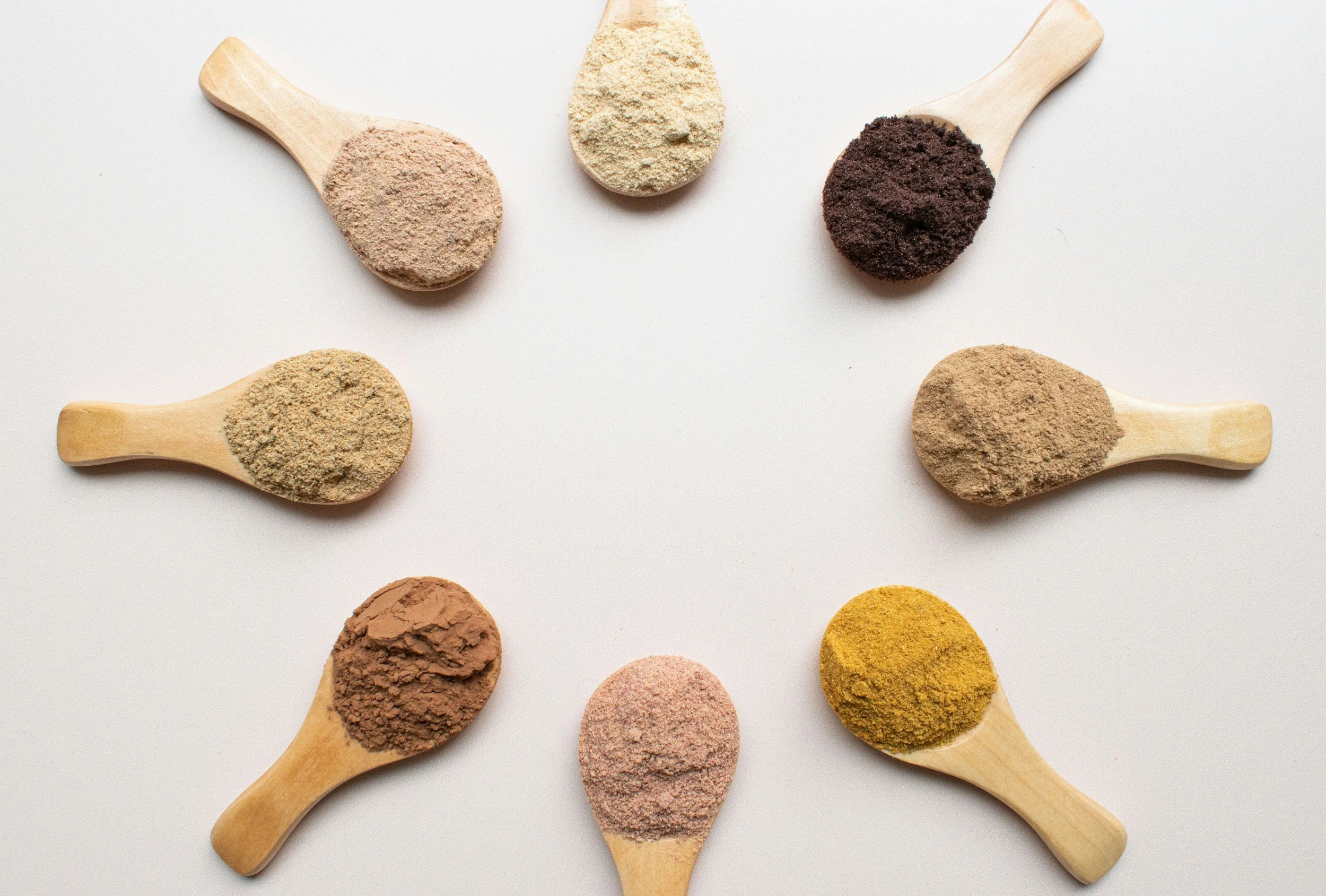
Creating lepas - masks or packs made from herbal pastes - works wonders for the treatment of skin imbalances. They can be completely customized to the individual’s needs using a combination of dried or fresh powdered herbs and liquid mediums. Here are some of our favorite herbal products to include:
For the powder base:
Manjistha (Rubia cordifolia) is one of the great skin herbs of Ayurveda. Its Pitta pacifying properties soothe inflammation and varnya action supports a healthy complexion and can reduce hyperpigmentation.
Sandalwood (Santalum album) is another soothing, Pitta pacifying herb that calms inflammation.
Because of its sattvic quality it is especially beneficial in skin inflammation or acne related to stress and unresolved emotions.
Turmeric (Curcuma longa) is anti-microbial, anti-inflammatory and supports the healthy glow of the skin. A little goes a long way, just add a pinch to your face masks and keep on for a couple of minutes to prevent staining of the skin. Turmeric is a fabulous wound healer and can be packed dry into cuts and scrapes to promote speedy tissue recovery and prevent infection.
Neem (Azadirachta indica) is the best anti-microbial, anti-fungal and anti-parasitic herb. Great for fungal infections like athlete’s foot as well as acne. Remember that this herb is very drying so combine with aloe vera gel or rose water to offset the Vata qualities.
Clays (such as bentonite) have extractive qualities that are useful in congestive disorders caused by Kapha and Ama. They also soak up excessive oiliness caused by either Kapha or Pitta dosha. Again, these can be drying so make sure to offset with a hydrating liquid medium.
Liquid mediums for mixing lepas :
Aloe vera gel - Refrigerant, hydrating, antimicrobial
Rose water - Cooling, soothing, hydrating and tonifying due to its astringency
Yoghurt - Gently exfoliating, nourishing
Raw Honey - Mildly antimicrobial, softening, smoothing
Using this array of herbs, combine your own customized face mask by mixing powders with liquid media until a thick paste is formed. Apply to cleansed skin and allow to sit until mostly dry before gently removing with warm water. Pat dry with a clean washcloth and follow up with rosewater (toner) and your favorite Ayurvedic facial oils to re-hydrate the skin. The frequency of lepa therapy depends on the individual and concerns but should not exceed once a week to avoid disrupting the skin’s natural barrier and oils.
To learn more and practice using an array of these Ayurvedic products join our Ayurvedic Beauty Rituals for Radiant Living workshop on Saturday December 19th or sign up for an Ayurvedic Ritual Facial from January onwards.